

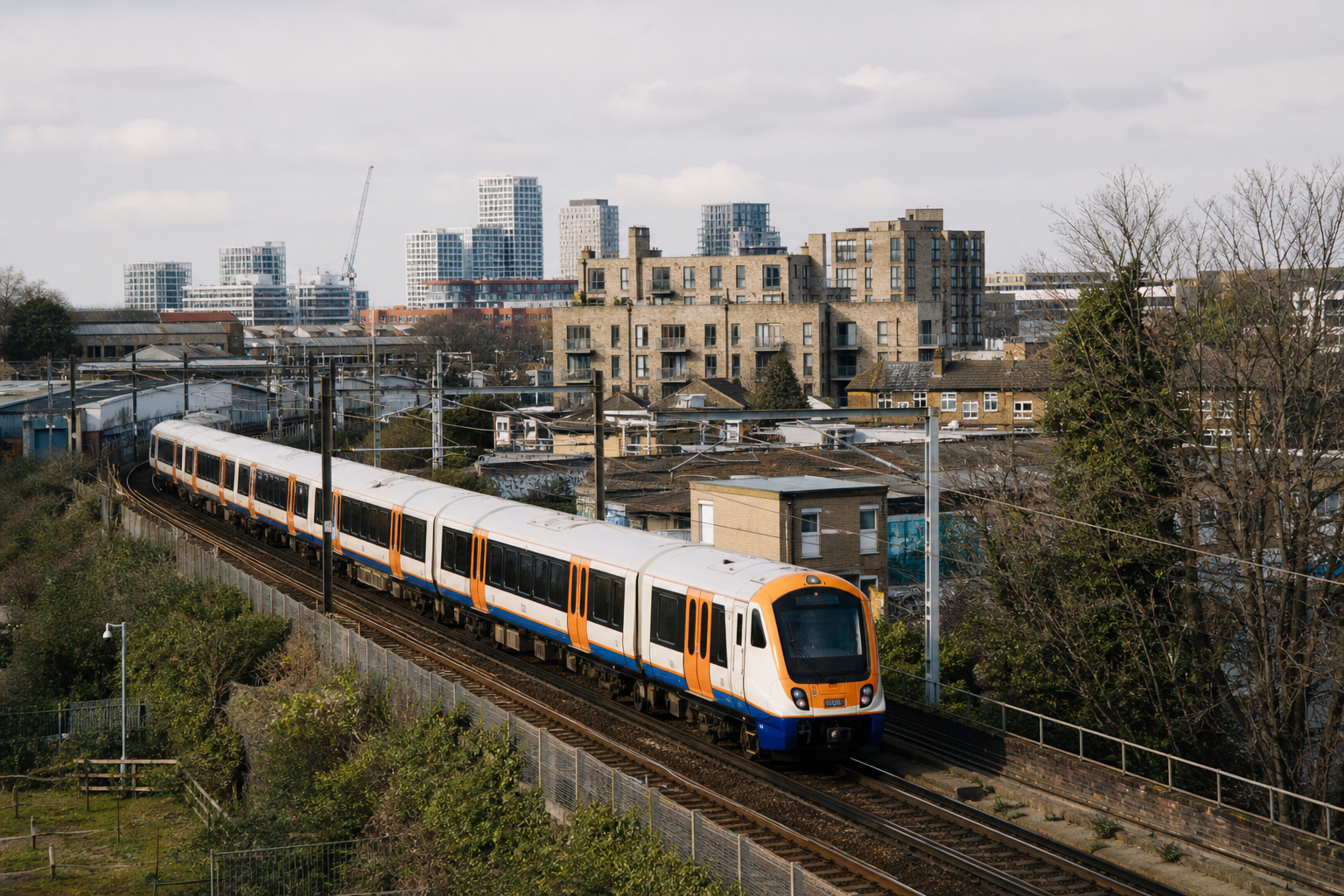
BusinessLDN has called for a clear funding plan for the proposed West London Orbital (WLO), arguing that the rail service could improve connections between employment centres and support housing and job creation across the capital.
The proposed London Overground route would link Hendon and Hounslow using existing railway corridors, including the Dudding Hill freight line. Transport for London estimates that it could support around 25,000 homes, create 11,500 jobs, generate up to £1.3bn in wider economic benefits and remove about 650,000 car journeys each year.
Connecting west London’s economic centres
BusinessLDN said the service would help connect Brent Cross, Old Oak and Park Royal with the Golden Mile and the Great West Corridor. It said improved access could help employers recruit staff and strengthen sectors including media, creative industries, technology, logistics and manufacturing.
The organisation also highlighted deprivation along parts of the proposed route. It said six of the 13 neighbourhoods in Harlesden and Kensal Green are among the 10% most deprived areas nationally, citing the English Indices of Deprivation 2025.
Better links could also improve access to Heathrow for passengers and airport workers, with connections through Old Oak Common to HS2, the Elizabeth line and the wider rail network.
Calls for transport and development funding
BusinessLDN said any future stations should provide step-free access and convenient interchange with existing rail, Underground and bus services. It also said TfL would need to provide sufficient capacity and reliability while protecting freight operations on the Dudding Hill line.
The group pointed to the chancellor’s Autumn Budget commitment to explore a “London Deal”, which could give the capital greater control over locally raised revenues and greater borrowing powers. It said this could provide tools to help fund projects such as the WLO, although new funding powers and construction remain some way off.
Research by BusinessLDN and WSP modelled up to £1bn in gross council tax and Stamp Duty Land Tax receipts over 25 years from additional housing associated with the route. The estimate compares with an indicative scheme cost of £1.2bn. BusinessLDN stressed that the figures are not guaranteed revenues.
The organisation has urged the government and the mayor to examine residential tax-increment financing, allowing some additional property tax revenues generated by housing growth around the route to be reinvested in the railway. It cited the Northern Line Extension to Battersea and Nine Elms as an example of London using tax-increment financing, with future business rates growth supporting repayment of borrowing.
“The case for the West London Orbital is straightforward: better connections, more homes, more jobs and a stronger west London economy,” said BusinessLDN programme director for transport Ed Richardson. “It’s now time to turn ambition into trains on tracks.”